

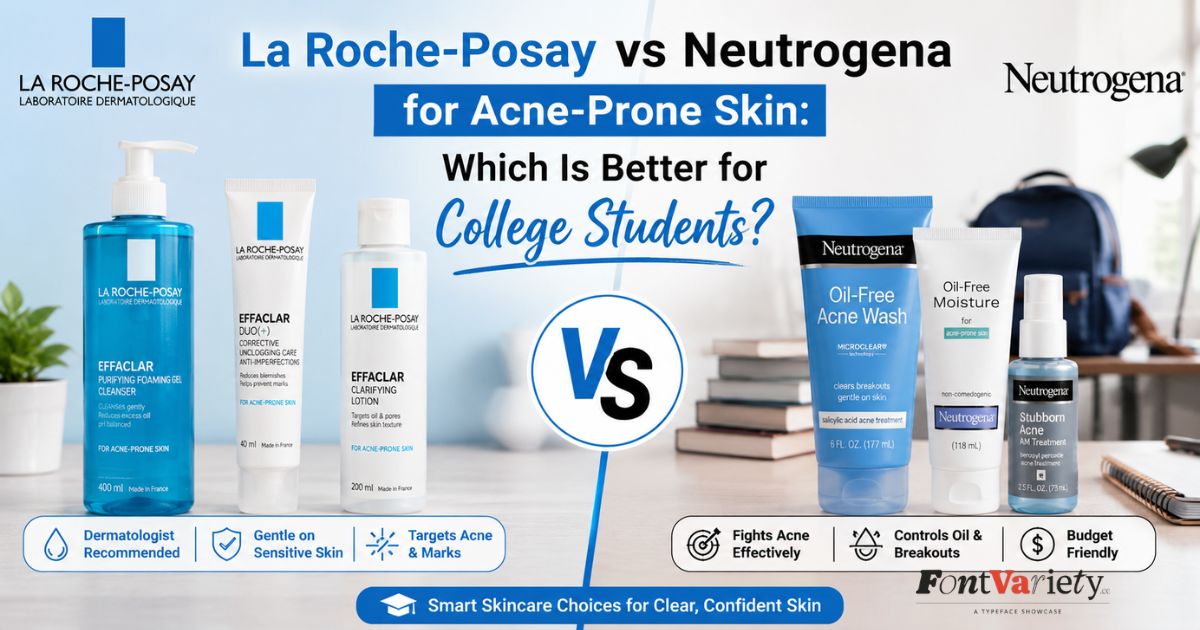
Choosing between La Roche-Posay and Neutrogena is one of the most common skincare dilemmas among college students dealing with acne. Both brands are widely trusted, backed by dermatologists and decades of use, yet they take noticeably different approaches to treating breakouts. One leans toward gentle, long-term skin health, while the other focuses on fast, targeted results.
For students juggling classes, part-time jobs, and irregular sleep schedules, skincare often has to be simple, effective, and affordable all at once. That makes the La Roche-Posay vs Neutrogena decision more than just a brand preference it’s about finding a routine that actually fits a busy, budget-conscious lifestyle.
This guide breaks down how each brand handles acne, sensitivity, oil control, budget concerns, and long-term skin health, so you can make a decision based on your specific skin type rather than guesswork or advertising. By the end, you’ll know exactly which brand or combination of both makes the most sense for your skin.
La Roche-Posay and Neutrogena Compared at a Glance
La Roche-Posay and Neutrogena are two of the most recommended skincare brands for people dealing with acne, but they take slightly different roads to get there. La Roche-Posay leans on dermatologist-developed formulas, thermal spring water, and a strong focus on sensitive skin tolerance. Neutrogena, on the other hand, is known for accessible, drugstore-friendly products built around proven acne-fighting actives like salicylic acid and benzoyl peroxide.
For a college student trying to manage breakouts between classes, both brands offer solid options, but the “right” choice depends on skin sensitivity, budget, and how fast results are needed. La Roche-Posay tends to be gentler and more suited to reactive skin, while Neutrogena often delivers quicker, more aggressive results for oilier or more resilient skin types. Neither brand is universally “better” — it’s about matching the product to your skin’s actual behavior.
Below is a quick side-by-side snapshot before diving deeper into specific skin concerns, budgets, and ingredient breakdowns that matter most for students juggling dorm-room routines and tight schedules.
| Feature | La Roche-Posay | Neutrogena |
| Price Range | Mid-range ($15–$30) | Budget-friendly ($8–$20) |
| Skin Focus | Sensitive, reactive skin | Oily, acne-prone skin |
| Key Actives | Salicylic acid, niacinamide | Salicylic acid, benzoyl peroxide |
| Availability | Pharmacies, some drugstores | Almost every drugstore |
| Best For | Gentle, long-term care | Fast, targeted acne treatment |
Why College Students Often Compare La Roche-Posay and Neutrogena
College life comes with irregular sleep, stress, dorm shower stalls with questionable water pressure, and diets that don’t always help skin. These factors make acne flare-ups common, and students often start comparing brands after their skin reacts poorly to something too harsh or too weak. La Roche-Posay and Neutrogena both show up constantly in skincare recommendations, so they naturally become the go-to comparison.
Budget is another major factor. Students are typically shopping with limited funds, so they want to know which brand gives more value without compromising results. Neutrogena’s lower price point makes it an easy first try, while La Roche-Posay’s higher price is often justified by its gentler formulation and dermatologist backing.
Convenience also plays a role since students want products they can grab at a local pharmacy or order quickly online between classes. Both brands are widely available, but Neutrogena has a slight edge in accessibility since it’s stocked in nearly every big-box store and grocery chain, while La Roche-Posay sometimes requires a trip to a specific pharmacy or online order.
How La Roche-Posay Approaches Acne Care
La Roche-Posay’s philosophy centers on treating acne without stripping the skin barrier, which is why many of its formulas include soothing ingredients like niacinamide and thermal spring water alongside actives like salicylic acid. The brand markets itself heavily toward people with reactive or easily irritated skin, positioning acne treatment as something that shouldn’t come at the cost of comfort.
This approach makes La Roche-Posay a popular pick for students who have tried harsher acne products in the past and ended up with redness, flaking, or increased sensitivity. The trade-off is that results can feel slower since the formulas are intentionally less aggressive, prioritizing long-term skin tolerance over rapid visible change.
How Neutrogena Approaches Acne Care
Neutrogena’s approach is more direct, relying on well-studied concentrations of benzoyl peroxide and salicylic acid to actively target acne-causing bacteria and clear pores. The brand’s messaging focuses on visible results within days to weeks, appealing to students who want breakouts gone before an event, interview, or photo.
This more assertive formulation style can work fast, but it also comes with a higher chance of dryness or irritation, especially for students with already sensitive or reactive skin. Neutrogena essentially trades some gentleness for speed, which suits certain skin types far better than others.
La Roche-Posay vs Neutrogena for Everyday Acne Management
For daily, ongoing acne management rather than treating an active flare-up, La Roche-Posay tends to fit more naturally into a simple routine. Its cleansers and moisturizers are formulated to be used every day without building up irritation over time, which matters for students who don’t want to babysit their skin between classes.
Neutrogena also offers daily-use acne lines, but many of its stronger treatments are designed for targeted use rather than all-day, every-day application. Overusing benzoyl peroxide-based products, for example, can lead to excessive dryness if used more than directed.
For students who want a “set it and forget it” daily routine, La Roche-Posay is usually easier to stick with long term. Those who want a daily basic routine paired with occasional spot treatment often mix both brands, which is a common and workable approach.
La Roche-Posay vs Neutrogena for Red, Irritated Breakouts
When breakouts come with redness and visible inflammation, gentleness becomes more important than raw strength. La Roche-Posay’s Effaclar line and similar products are built with calming ingredients that reduce visible redness while still targeting acne, making it a strong choice for angry, inflamed skin.
Neutrogena products can still be used on irritated breakouts, but students should be cautious with anything containing a high concentration of benzoyl peroxide, since it can intensify redness before things improve. Spot-treating only the affected area rather than the whole face helps reduce this risk.
Overall, La Roche-Posay tends to be the safer pick when skin is already inflamed, while Neutrogena is better reserved for use once the acute redness has calmed down and the goal shifts to prevention and control.
La Roche-Posay vs Neutrogena for Excess Oil and Shiny Skin
Oily skin is one of the most common complaints among college students, especially with long days spent indoors under fluorescent lighting and minimal time for skincare breaks. Neutrogena has historically built its acne reputation around oil control, using salicylic acid formulas designed to penetrate pores and reduce shine throughout the day.
La Roche-Posay also addresses oily skin, particularly through its Effaclar Mat and similar mattifying products, but its overall formulation philosophy still prioritizes barrier health over aggressive oil stripping. This means oil control may be slightly less dramatic but also less likely to trigger a rebound oil production cycle.
For students dealing specifically with heavy shine and clogged pores, Neutrogena often provides a more noticeable mattifying effect faster, while La Roche-Posay offers a steadier, more balanced approach that’s kinder to the skin barrier over months of use.
Benefits for Students With Oily Skin
Oily-skinned students benefit from Neutrogena’s lightweight, oil-free formulas that are specifically designed not to clog pores further, which is ideal for layering under makeup or sunscreen during long class days. The immediate mattifying effect also means less midday shine without needing blotting sheets every few hours.
La Roche-Posay benefits oily-skinned students differently by focusing on regulating oil production over time rather than just absorbing it temporarily. This can mean fewer breakouts overall in the long run, even if the immediate shine-control effect isn’t as dramatic as Neutrogena’s.
Also Like To Read This: SFM Compile Workflow: A Practical Guide to Source Filmmaker Models
La Roche-Posay vs Neutrogena for Fast Acne Results
When a breakout needs to disappear fast — before a presentation, interview, or big weekend — Neutrogena’s benzoyl peroxide-based spot treatments typically act faster than most La Roche-Posay equivalents. Benzoyl peroxide is known for killing acne-causing bacteria quickly, often producing visible improvement within 24 to 48 hours.
La Roche-Posay can still help with fast results, particularly through targeted treatments, but its overall philosophy of gentle, sustained improvement means visible change usually takes a few more days compared to Neutrogena’s more potent actives.
For students who need speed above all else, Neutrogena is generally the stronger short-term pick, while La Roche-Posay is better suited for those willing to trade a few extra days of waiting for less irritation along the way.
La Roche-Posay vs Neutrogena: What’s the Main Difference?
The core difference between these two brands comes down to philosophy: La Roche-Posay treats acne as part of a broader skin-health and sensitivity conversation, while Neutrogena treats acne as a problem to solve quickly and directly. This shapes everything from ingredient concentration to marketing language.
Price and positioning also differ meaningfully. La Roche-Posay sits in the mid-range price bracket and is often recommended by dermatologists as a “safe” everyday option, while Neutrogena occupies the budget-to-mid drugstore space and is marketed more toward immediate, visible acne-fighting power.
In short, La Roche-Posay is the brand for skin that reacts easily and needs patience, while Neutrogena is the brand for skin that can tolerate stronger actives and wants faster payoff. Understanding this distinction makes it much easier to choose the right products instead of guessing.
La Roche-Posay vs Neutrogena for Sensitive Acne-Prone Skin
Sensitive, acne-prone skin is a tricky combination because most strong acne treatments risk making sensitivity worse. La Roche-Posay is generally regarded as the safer choice here, since many of its formulas are fragrance-free, dermatologist-tested, and specifically designed to avoid triggering redness or stinging.
Neutrogena does offer sensitive-skin-friendly options, but its core acne lineup leans toward stronger actives that aren’t always ideal for reactive skin. Students with sensitive skin who want to try Neutrogena should look specifically for its “sensitive skin” labeled products rather than the standard acne treatment line.
For most students dealing with both sensitivity and breakouts at the same time, starting with La Roche-Posay and slowly introducing stronger actives later is a safer strategy than starting aggressive and dealing with irritation afterward.
La Roche-Posay vs Neutrogena: Which Gives Faster Results?
Speed of results largely comes down to active ingredient concentration, and Neutrogena generally wins this category due to its higher use of benzoyl peroxide in several product lines. Benzoyl peroxide is one of the fastest-acting over-the-counter acne ingredients available.
La Roche-Posay’s formulas, while effective, are built for gradual improvement rather than rapid change, which means results may take two to four weeks to become clearly visible instead of a few days. This isn’t a flaw — it’s simply a different treatment timeline.
Students who are impatient or need results for a specific event should lean toward Neutrogena, while those focused on long-term skin health with fewer side effects should expect to wait a bit longer with La Roche-Posay, and that patience typically pays off with calmer, more resilient skin.
La Roche-Posay vs Neutrogena: Pros and Cons
Every skincare brand comes with trade-offs, and weighing them side by side makes the decision easier for a student comparing shelf options. La Roche-Posay’s biggest strength is tolerability, while its biggest limitation is price and slower visible results. Neutrogena’s biggest strength is affordability and speed, while its biggest limitation is a higher chance of irritation for sensitive users.
Neither brand is flawless, and both have loyal users who swear by their results because their skin responded well to that specific formulation style. This is why “better” really depends on the individual’s skin type rather than brand reputation alone.
The table below breaks down the core pros and cons so students can quickly scan which trade-offs matter most to them.
| Category | La Roche-Posay | Neutrogena |
| Gentleness | High | Moderate |
| Speed of Results | Moderate | High |
| Price | Higher | Lower |
| Best Skin Type | Sensitive/reactive | Oily/resilient |
| Availability | Moderate | Very high |
Compare the Active Ingredient, Not the Brand Reputation
Brand loyalty can sometimes cloud good decision-making, especially when a product has a strong reputation but doesn’t actually match a person’s skin needs. The smarter approach is comparing the active ingredients directly — salicylic acid, benzoyl peroxide, niacinamide — rather than choosing based on which name sounds more “premium” or trustworthy.
For example, a Neutrogena product with 2% salicylic acid may behave very similarly to a La Roche-Posay product with the same concentration, even though the price and packaging differ significantly. The active ingredient does the actual work; the rest is formulation, texture, and marketing.
Students should get in the habit of checking ingredient labels rather than assuming one brand is automatically superior. This habit alone can save money and prevent buying multiple products that essentially do the same thing under different names.
La Roche-Posay vs Neutrogena for Long-Term Skin Health
Long-term skin health depends on more than just clearing current breakouts — it also depends on preserving the skin barrier so future breakouts are less frequent. La Roche-Posay is generally considered stronger in this department due to its barrier-supporting ingredients and lower irritation potential over extended use.
Neutrogena can absolutely be used long term as well, but students should be mindful of rotating or moderating stronger actives like benzoyl peroxide to avoid long-term dryness or sensitivity build-up. Pairing it with a solid moisturizer helps offset this risk significantly.
For students planning to stick with one routine for years rather than months, La Roche-Posay tends to offer a more sustainable, low-maintenance path, while Neutrogena works best when actively managed and adjusted based on how skin responds over time.
La Roche-Posay vs Neutrogena for Tight Student Budgets
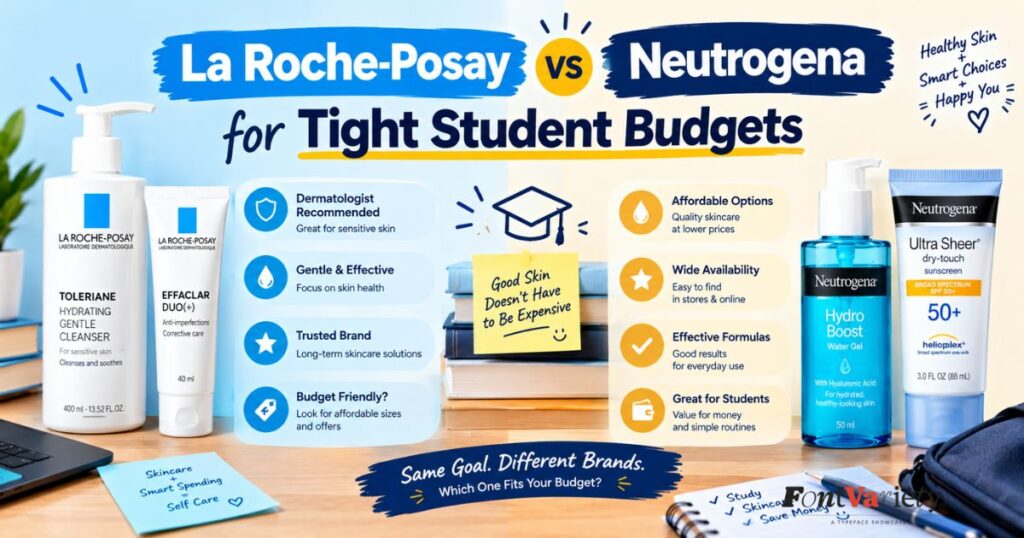
Budget is often the deciding factor for college students, and this is where Neutrogena has a clear practical advantage. Its products are widely available at lower price points, making it easier to maintain a consistent routine without a significant financial commitment each semester.
La Roche-Posay’s slightly higher pricing can still fit a student budget, especially if used strategically — for example, using it only for the most sensitive parts of a routine while filling in with cheaper products elsewhere. Sales, student discounts, and multi-packs can also help offset the cost difference.
For students who need to prioritize affordability above all else, Neutrogena is generally the more sustainable option semester after semester, while La Roche-Posay may require more careful budgeting or selective use of just one or two key products.
What College Students Like Most About La Roche-Posay
Students frequently mention how gentle La Roche-Posay feels on the skin, even when actively treating breakouts, which makes it easier to stick with a daily routine without dreading potential irritation. The lack of strong fragrance and the soothing texture of many products also gets consistently positive feedback.
Another common favorite is the brand’s reputation and dermatologist association, which gives students confidence that they’re using something backed by real skincare science rather than just clever marketing. This peace of mind matters, especially for students newer to building a skincare routine.
Top Reasons to Choose La Roche-Posay
Students often choose La Roche-Posay because of its strong reputation for treating sensitive and reactive skin without sacrificing acne-fighting effectiveness. The brand’s consistent formulation quality builds trust over time, especially after trying harsher products that didn’t work out.
Additional reasons include the brand’s dermatologist-recommended status, minimal fragrance use, and the noticeable improvement in overall skin comfort that many users report within the first few weeks of consistent use.
What College Students Like Most About Neutrogena
Neutrogena’s biggest draw for students is undeniably its affordability combined with genuinely effective acne-fighting ingredients that have been trusted for decades. Being able to walk into almost any store and grab a proven product without overthinking it is a major convenience during busy semesters.
Students also appreciate the variety within Neutrogena’s lineup, since there are options for oily skin, combination skin, and even more sensitive formulations, allowing some flexibility without switching to an entirely different brand.
Top Reasons to Choose Neutrogena
Neutrogena is often chosen for its fast, visible results, particularly for students dealing with sudden or stress-related breakouts before an important event. The brand’s long-standing reputation in acne treatment gives it a sense of reliability built over years of consistent use by millions of people.
Its affordability and easy access at nearly any drugstore also make it the practical default for students who don’t want to special-order products or wait for online shipping to treat active breakouts.
Common Drawbacks of La Roche-Posay and Neutrogena
No skincare brand is perfect, and both La Roche-Posay and Neutrogena come with drawbacks that students should factor into their decision. Price sensitivity, availability, and how well a formula matches individual skin chemistry can all create friction regardless of which brand is chosen.
Students sometimes assume that a higher price automatically means better results, or that a cheaper product must be lower quality, but both assumptions can lead to disappointment. Understanding each brand’s specific limitations helps set realistic expectations from the start.
Potential Downsides of La Roche-Posay
The most common complaint about La Roche-Posay is its higher price point compared to typical drugstore alternatives, which can be a real barrier for students on a tight budget. Some users also report that results take noticeably longer to appear compared to stronger drugstore treatments.
Availability can also be inconsistent depending on location, since not every drugstore carries the full La Roche-Posay lineup, sometimes requiring students to order online and wait for shipping during an active breakout.
Potential Downsides of Neutrogena
Neutrogena’s stronger actives, while effective, can cause dryness, peeling, or irritation for students with more reactive skin types, especially if used too frequently or in combination with other strong products. This can create a frustrating cycle of over-treating and then over-correcting.
Some users also feel that Neutrogena’s formulas prioritize speed over long-term skin comfort, meaning that while breakouts may clear faster, the skin barrier can feel more compromised afterward compared to gentler alternatives.
Which Acne-Prone College Students Should Choose La Roche-Posay?
La Roche-Posay is generally the better choice for students with sensitive, easily irritated, or reactive skin who have struggled with harsher acne products in the past. It’s also a strong pick for students who prefer a low-maintenance routine that won’t require constant adjustment or careful moderation.
Students who prioritize long-term skin health over immediate results, or who are dealing with inflamed, red breakouts rather than just oiliness, will likely see better outcomes with La Roche-Posay’s gentler formulation philosophy.
Which Acne-Prone College Students Should Choose Neutrogena?
Neutrogena tends to work best for students with oilier, more resilient skin that can tolerate stronger actives without excessive irritation. It’s also the better pick for students who need visible results quickly, whether for a specific event or simply because they want breakouts gone as fast as possible.
Budget-conscious students who want proven, effective acne treatment without a higher price tag will also find Neutrogena to be the more practical long-term option, provided they moderate usage to avoid overdrying the skin.
Is La Roche-Posay Better for Sensitive, Acne-Prone Skin?
For most cases, yes — La Roche-Posay is generally considered the stronger option for sensitive, acne-prone skin due to its emphasis on soothing, barrier-friendly formulations. Its lower likelihood of triggering redness or irritation makes it a safer starting point for students unsure how their skin will react.
That said, “sensitive skin” varies from person to person, and some students with sensitive skin still tolerate certain Neutrogena products well, especially those labeled specifically for sensitive or gentle use.
The safest approach is patch-testing any new product regardless of brand, since sensitivity levels can differ even among people with similar skin types, and no brand guarantees a universally irritation-free experience.
Which Brand Is Better for a Student Budget?
Neutrogena is generally the better choice for students trying to stretch a limited budget, thanks to its lower price points and wide availability at nearly every major retailer. This makes it easier to maintain a consistent routine without financial strain each month.
La Roche-Posay can still work within a student budget if used selectively, such as reserving it for one key product like a cleanser or moisturizer while using more affordable options for the rest of the routine.
Ultimately, the better budget choice depends on whether a student prioritizes saving money upfront or investing slightly more now to potentially avoid irritation-related setbacks later, which can also cost time and money to fix.
Active Ingredients, Decoded for Someone Who Is Not a Chemistry Major
Skincare labels can feel like a foreign language, but the core acne-fighting ingredients are simpler than they look. Salicylic acid works by exfoliating inside the pore to clear out debris and oil, making it useful for blackheads and everyday breakouts. Benzoyl peroxide, on the other hand, works by killing acne-causing bacteria directly, making it more effective for active, inflamed pimples.
Niacinamide, commonly found in La Roche-Posay products, doesn’t directly fight acne bacteria but helps calm redness and support the skin barrier, which indirectly reduces breakouts caused by irritation and inflammation. Understanding these basic mechanisms makes it much easier to choose a product based on what your skin actually needs rather than guessing from packaging claims.
Can You Mix La Roche-Posay and Neutrogena Products?
Yes, mixing products from both brands is completely fine and actually a common approach among students who want the benefits of both gentleness and strength. Many people use a La Roche-Posay cleanser or moisturizer as their gentle daily base, then add a Neutrogena spot treatment only when an active breakout appears.
The main thing to watch for is combining two strong actives at once, such as layering a high-concentration benzoyl peroxide product with a strong salicylic acid product, since this can overwhelm the skin barrier and cause excessive dryness or irritation.
As long as students introduce new combinations slowly and pay attention to how their skin responds, mixing brands based on ingredient function rather than brand loyalty is a smart, flexible strategy.
7 Mistakes College Students Make With Acne Products
Even good products can fail to work if used incorrectly, and college students often unknowingly sabotage their own skincare routines. One common mistake is using too many active ingredients at once, which overwhelms the skin barrier instead of speeding up results. Another is switching products too quickly before giving a formula the two-to-four weeks typically needed to see real change.
Skipping moisturizer because skin feels oily is another frequent error, since dehydrated skin can actually produce more oil to compensate, worsening acne over time. Overwashing the face, sometimes more than twice a day out of frustration, can also strip the skin barrier and trigger more breakouts rather than fewer.
Other common missteps include not wearing sunscreen while using acne actives that increase sun sensitivity, picking at breakouts which increases scarring risk, and copying a roommate’s entire routine without considering that different skin types need different approaches. Avoiding these habits often improves results more than switching products ever will.
Frequently Asked Questions
Is La Roche-Posay or Neutrogena better for acne scars?
Neither brand specifically targets deep scarring, but La Roche-Posay’s gentler formulas are less likely to cause additional irritation that can worsen post-acne marks. For actual scar fading, ingredients like niacinamide (found in La Roche-Posay) can help more than acne-fighting actives alone.
Can I use La Roche-Posay and Neutrogena together in the same routine?
Yes, many students combine a gentle La Roche-Posay cleanser or moisturizer with a Neutrogena spot treatment for active breakouts. Just avoid layering two strong actives, like benzoyl peroxide and high-strength salicylic acid, at the same time.
Which brand is safer for daily long-term use?
La Roche-Posay is generally considered safer for continuous daily use due to its lower irritation potential and barrier-supporting formulas. Neutrogena can be used long term too, but stronger treatments are often better rotated rather than used every single day.
Does Neutrogena work faster than La Roche-Posay for breakouts?
In most cases, yes — Neutrogena’s higher concentrations of benzoyl peroxide tend to show visible results within a few days. La Roche-Posay typically takes two to four weeks for noticeable improvement, but with less risk of irritation along the way.
Is La Roche-Posay worth the higher price for a student?
It depends on your skin type and budget. If you have sensitive or reactive skin, the higher price is often worth it to avoid irritation-related setbacks; if your skin tolerates stronger actives well, Neutrogena offers similar results for less money.
Which brand is better for oily, acne-prone skin specifically?
Neutrogena has historically been stronger for oil control and mattifying effects throughout the day. La Roche-Posay also addresses oiliness through products like Effaclar Mat, but with a more gradual, barrier–friendly approach.
Should beginners start with La Roche-Posay or Neutrogena?
Beginners with unknown sensitivity levels are usually safer starting with La Roche-Posay, since it’s less likely to cause a harsh reaction. Once you understand how your skin responds, you can introduce stronger Neutrogena products as needed.
Conclusion
There’s no single “winner” in the La Roche-Posay vs Neutrogena debate the better brand depends entirely on your skin type, budget, and how quickly you need results. La Roche-Posay shines for sensitive, reactive skin that needs a gentle, sustainable routine, while Neutrogena stands out for oilier, more resilient skin that responds well to faster-acting, budget-friendly treatments.
Many college students find that the smartest approach isn’t choosing one brand exclusively, but combining both based on what each does best a calming La Roche-Posay product for daily use, paired with a targeted Neutrogena treatment when breakouts flare up. This kind of ingredient-based, needs-first thinking tends to produce better results than brand loyalty alone.
Whichever direction you choose, the key is patience, consistency, and paying attention to how your own skin responds rather than following someone else’s routine exactly. With the right combination of products and realistic expectations, clearer skin is absolutely achievable even on a tight student schedule and budget.