

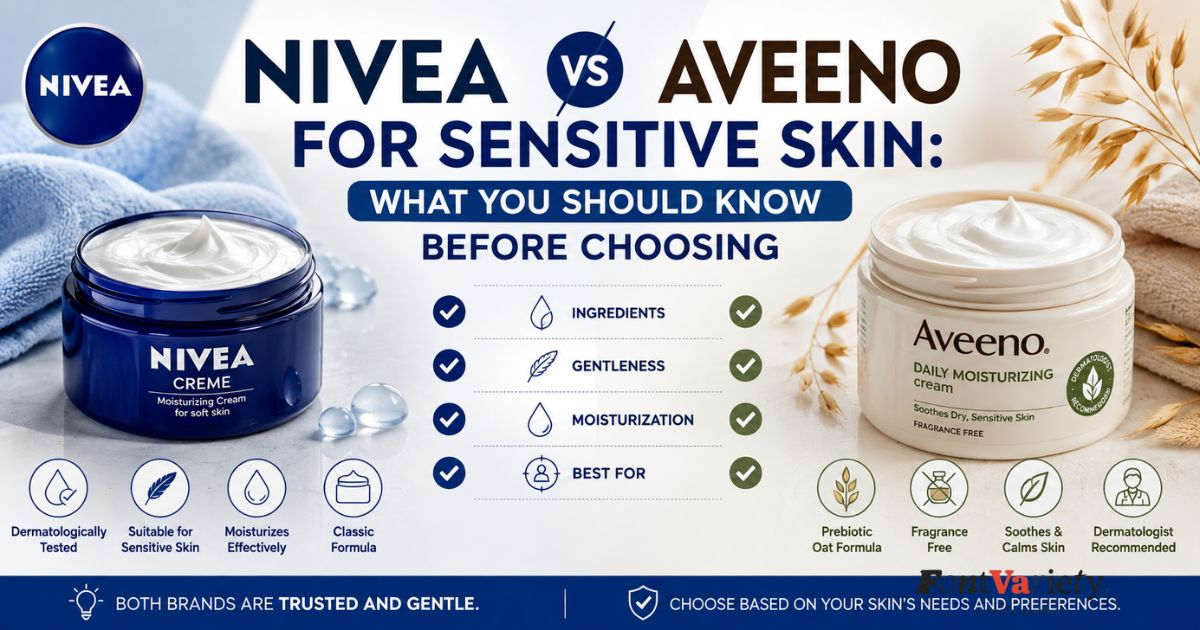
Choosing between Nivea vs Aveeno can feel confusing when your skin reacts to almost every new product you try. Both brands are trusted names in skincare, but they take very different approaches to hydration, with one leaning on dermatologist-backed simplicity and the other on rich, affordable moisture.
This guide breaks down exactly how the two brands compare across the factors that matter most for sensitive skin, including texture, fragrance content, and everyday wearability. Whether you’re dealing with occasional dryness or a more reactive skin condition, understanding these differences will make it much easier to pick the right one.
By the end, you’ll know which brand fits your specific skin concerns, budget, and daily routine, along with answers to the most common questions people ask before switching moisturizers.
Nivea vs Aveeno: Quick Comparison for Sensitive Skin
When it comes to Nivea vs Aveeno, both brands have built long-standing reputations for producing skincare that works across a wide range of skin types, including sensitive skin. Nivea leans on decades of dermatological research and a broad catalog of creams, lotions, and souffles designed for everyday hydration, while Aveeno is best known for its oat-based formulas that are frequently recommended by dermatologists for reactive or easily irritated skin.
At a glance, Aveeno tends to be the go-to choice for people who experience redness, eczema-prone patches, or frequent flare-ups, thanks to its colloidal oatmeal base and minimal-ingredient philosophy. Nivea, on the other hand, is often praised for its richer textures and affordability, making it a practical everyday option for those with mild sensitivity rather than diagnosed skin conditions.
Neither brand is universally “better” in every scenario, and the right pick usually comes down to your specific skin concerns, budget, and how your skin reacts to fragrance or heavier moisturizers. The sections below break down exactly where each brand shines so you can make an informed decision.
Nivea vs Aveeno: Which Brand Is More Sensitive-Skin Friendly?
Dermatologists frequently point to Aveeno as the more clinically sensitive-skin-friendly brand, largely because many of its products are formulated with fewer potential irritants and are often labeled hypoallergenic. The active colloidal oatmeal ingredient has soothing properties that have been studied for calming inflamed or itchy skin, which gives Aveeno an edge for people managing conditions like eczema or rosacea.
Nivea, while not marketed as a medical-grade sensitive skin brand in the same way, still offers several lines specifically designed for sensitive users, particularly within its Nivea Sensitive and Nivea Soft ranges. These products typically reduce fragrance load and use gentler surfactants, making them suitable for people with mildly reactive skin who don’t necessarily have a diagnosed dermatological condition.
The real difference often comes down to severity. If your sensitivity is occasional dryness or tightness, Nivea’s sensitive lines can be more than adequate. If you’re dealing with chronic irritation, eczema, or skin that reacts to almost everything, Aveeno’s oat-based formulations generally provide a more consistent and clinically backed level of comfort.
Nivea vs Aveeno: What Makes Aveeno Popular for Sensitive Skin?
Aveeno’s popularity among sensitive skin users largely traces back to its signature ingredient, colloidal oatmeal, which has been recognized by dermatologists for its skin-protectant and anti-irritant qualities. This ingredient forms a light barrier on the skin that helps lock in moisture while calming redness and itchiness, which is a major reason the brand is so often recommended for eczema-prone users.
Beyond the oatmeal base, Aveeno has built trust through a minimalist approach to formulation, avoiding many common irritants like heavy dyes and harsh preservatives in its sensitive skin lines. This stripped-back philosophy appeals to people who have had negative reactions to more heavily fragranced or ingredient-dense moisturizers in the past.
Aveeno also benefits from strong endorsement within the dermatology community, with many of its products carrying recommendations from skin specialists for conditions ranging from dry skin to more complex inflammatory issues. That clinical credibility gives users an added layer of confidence when choosing a product for a condition rather than just general dryness.
Why Sensitive Skin Users Like Aveeno
Many sensitive skin users describe Aveeno as the first brand that didn’t leave their skin feeling worse after application, which is a common complaint with heavier or more fragranced moisturizers. The lightweight, non-greasy finish of most Aveeno products also makes them easy to layer under makeup or sunscreen without causing pilling or additional irritation.
Another reason users gravitate toward Aveeno is consistency across its product line, since even its body washes, lotions, and specialty treatments tend to share the same gentle, oat-based formulation approach. This predictability matters a great deal for people whose skin reacts unpredictably to new ingredients, since they can trust the brand’s core formula even when trying a different product type.
Nivea vs Aveeno: Are Nivea Creams Gentle Enough?
Nivea creams are generally considered gentle for everyday use, though “gentle enough” ultimately depends on how reactive your skin actually is. The brand’s classic blue tin formula, along with its Soft and Sensitive lines, are formulated to hydrate without the heavy fragrance load found in some of Nivea’s more mainstream products, making them a reasonable option for mild sensitivity.
That said, some of Nivea’s core formulas do contain added fragrance and a broader ingredient list compared to Aveeno’s stripped-back approach, which can be a concern for users with more reactive or condition-driven sensitivity. It’s worth checking the specific product line rather than assuming all Nivea creams are equally gentle, since formulations can vary significantly between collections.
For people without a diagnosed skin condition who simply experience occasional dryness or tightness, Nivea creams are often gentle enough to use daily without issue. The brand’s long track record and affordability also make it easy to test a product without a major financial commitment, which is appealing for anyone still figuring out what their skin tolerates well.
Strengths of Nivea Creams
One of Nivea’s biggest strengths is its rich, deeply moisturizing texture, which many users find more satisfying for very dry skin compared to Aveeno’s lighter lotions. Products like the Nivea Creme have a decades-long reputation for locking in moisture, particularly in colder climates or during winter months when skin tends to lose hydration faster.
Nivea also stands out for its affordability and wide availability, since its products are sold in nearly every pharmacy and supermarket at a lower price point than many specialty sensitive skin brands. This accessibility makes it easy for users to restock regularly and apply generously without worrying about running through an expensive product too quickly.
Nivea vs Aveeno for Dry and Sensitive Skin
For skin that is both dry and sensitive, the ideal product usually needs to do two jobs at once: replenish lost moisture and avoid triggering irritation. Aveeno tends to perform well here because its oat-based formulas are specifically designed to soothe while hydrating, making it a solid pick for people whose dryness is tied to an underlying sensitivity issue.
Nivea, particularly its richer creams like Nivea Creme or the Smooth Sensation range, can outperform Aveeno in terms of sheer moisturizing power, especially for skin that’s dry but not necessarily reactive to fragrance or additional ingredients. Users dealing with rough patches, flaking, or seasonal dryness often find Nivea’s thicker textures more effective at restoring comfort.
The best approach for dry and sensitive skin often depends on which concern is more dominant. If irritation and reactivity are the primary issue, Aveeno’s gentler, minimal-ingredient formulas are usually the safer starting point. If dryness is the main complaint and your skin tolerates fragrance reasonably well, Nivea’s heavier creams can deliver more noticeable relief.
Also Like To Read This: Connections Forbes Guide 2026: How to Find Hints and Solve Each Puzzle
Nivea vs Aveeno: Which Feels Better on the Skin?
Texture and sensory experience play a big role in how people judge a moisturizer, and Nivea and Aveeno offer noticeably different feels on the skin. Nivea’s classic formulas tend to have a richer, slightly heavier texture that leaves a more noticeable protective layer, which many users associate with deep, long-lasting hydration.
Aveeno products generally have a lighter, more quickly absorbing texture that sinks into the skin without leaving much residue. This makes Aveeno a popular choice for daytime use or for people who dislike the greasy or tacky feeling that heavier creams can sometimes leave behind.
Ultimately, “feels better” is subjective and tied to personal preference as much as skin type. Someone with very dry skin may prefer the substantial, cushiony feel of Nivea, while someone with combination or reactive skin may favor Aveeno’s lighter finish that doesn’t feel like it’s sitting on top of the skin.
Do you have sensitive skin?
Sensitive skin typically shows up as redness, itching, burning, or tightness after using certain products, exposure to weather changes, or even after washing with regular water. If your skin reacts noticeably to new skincare products, sunscreen, or fragranced items more often than not, there’s a good chance you’re dealing with some degree of sensitivity.
Other common signs include visible dryness or flaking that doesn’t improve with regular moisturizing, a tendency toward flushing or visible capillaries, and skin that feels uncomfortable rather than simply dry after cleansing. These symptoms can range from mild and occasional to chronic and condition-driven, such as with eczema or rosacea.
If you’re unsure whether your skin qualifies as sensitive, a simple patch test with a new product on your inner arm before applying it to your face can help. Consistent reactions across multiple products, rather than a one-off issue with a single item, are usually a stronger indicator of genuine sensitivity.
Caring for sensitive skin
Caring for sensitive skin starts with simplifying your routine, since layering too many active ingredients or products at once increases the chances of irritation. Sticking to a small number of well-tolerated products, and introducing anything new one at a time, makes it much easier to identify what’s actually causing a reaction if one occurs.
Choosing fragrance-free or lightly fragranced formulas, like many options within the Nivea and Aveeno sensitive lines, also reduces the likelihood of triggering discomfort. Ingredients like colloidal oatmeal, glycerin, and ceramides are generally well-tolerated and help support the skin’s natural barrier rather than working against it.
Consistency matters just as much as ingredient choice, since sensitive skin tends to respond best to routines that don’t change frequently. Sticking with a moisturizer that works, applying it at similar times each day, and avoiding unnecessary exfoliation or harsh cleansers can significantly reduce flare-ups over time.
Sensitive skin care tips
- Patch test new products on your inner arm for 24–48 hours before applying them to your face
- Choose fragrance-free or minimally fragranced formulas whenever possible
- Avoid hot water when washing, since it can strip natural oils and worsen sensitivity
- Introduce new products one at a time so reactions are easy to trace back
Moisturize, calm and protect
- Apply moisturizer immediately after cleansing while skin is still slightly damp to lock in hydration
- Use products containing soothing ingredients like colloidal oatmeal, aloe, or panthenol
- Protect skin daily with a broad-spectrum sunscreen, since UV exposure can worsen sensitivity over time
Lifestyle changes may help protect your skin
Beyond product choice, everyday habits play a meaningful role in how sensitive skin behaves. Reducing exposure to extreme temperatures, harsh winds, and prolonged sun exposure can help prevent unnecessary irritation, since sensitive skin often reacts more strongly to environmental stress than average skin does.
Diet and hydration also contribute to overall skin comfort, with adequate water intake and a balanced diet supporting the skin’s natural barrier function. Some users also find that reducing stress, which is known to trigger flare-ups in conditions like eczema and rosacea, noticeably improves how calm their skin feels day to day.
Simple changes like switching to fragrance-free laundry detergent, using a humidifier in dry climates, and avoiding long, hot showers can also reduce the cumulative irritation that builds up from everyday environmental factors. These adjustments work alongside the right moisturizer rather than replacing it.
Moisturising cream by NIVEA – light lotions for normal skin
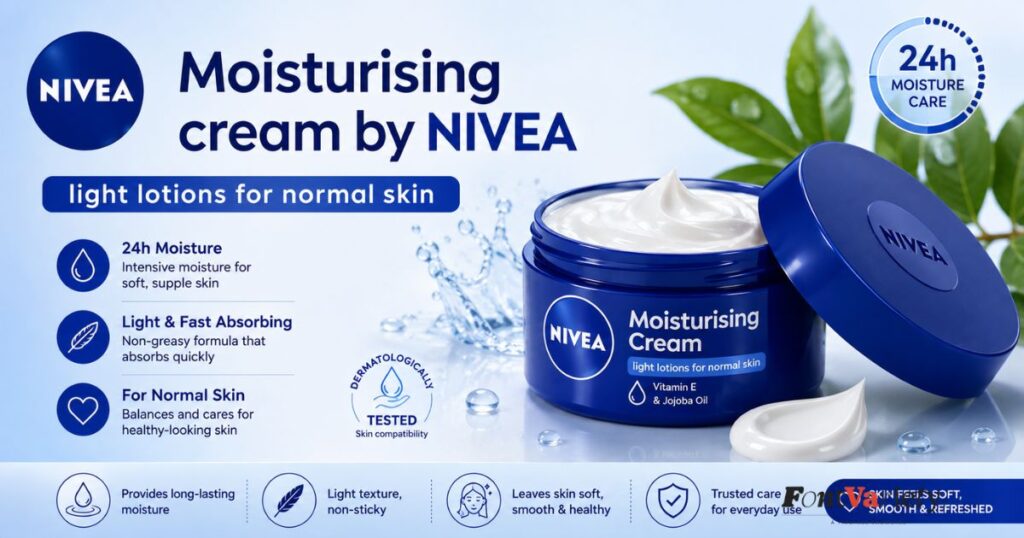
For users who don’t need the heavier formulas found in Nivea’s core sensitive lines, the brand also offers lighter lotions designed for normal to combination skin. These formulas absorb quickly and are well-suited to daily use under clothing or makeup, without the thicker, more occlusive feel of Nivea’s classic creams.
These lighter options still carry Nivea’s signature hydrating base but are formulated to feel less heavy, making them a good fit for warmer climates or for users who simply prefer a lotion over a cream. They’re a practical middle ground for people who want reliable moisture without the richness associated with Nivea’s more intensive product lines.
Using the right cream to obtain beautiful skin
Choosing the right cream isn’t just about hydration; it’s about matching a formula to your skin’s actual needs, whether that’s dryness, sensitivity, aging concerns, or general maintenance. Using a cream that’s mismatched to your skin type, such as an overly rich formula on oily skin, can lead to clogged pores or a heavy, uncomfortable feel throughout the day.
Both Nivea and Aveeno offer a range of textures and formulations, which means the “right” cream often comes down to testing a couple of options rather than assuming one product will work universally. Paying attention to how your skin feels a few hours after application, rather than just immediately after applying, is one of the best ways to judge whether a cream is genuinely suited to your skin.
NIVEA Smooth Sensation Souffle – Those who prefer a rich moisturiser cannot go wrong with this product
The Nivea Smooth Sensation Souffle is designed for users who want a noticeably richer, more indulgent texture without the heaviness of a traditional thick cream. Its whipped, souffle-like consistency delivers intense hydration while still feeling relatively easy to spread and absorb compared to denser formulas.
This product tends to appeal most to people with normal to dry skin who enjoy a more luxurious application experience, rather than those seeking a strictly minimal or fragrance-free formula. For sensitive skin users specifically, it’s worth checking the ingredient list first, since souffle-style formulas can sometimes include more fragrance than Nivea’s dedicated sensitive lines.
Nivea vs Aveeno: Which Brand Has More Fragrance-Free Options?
Aveeno generally offers a wider selection of fragrance-free products across its sensitive and eczema-focused lines, reflecting the brand’s overall positioning toward reactive and easily irritated skin. Many of its core moisturizers, cleansers, and specialty treatments are explicitly labeled fragrance-free, making it easier for users to shop with confidence.
Nivea does offer fragrance-free or lightly scented options within its Sensitive range, but fragrance-free formulations are less consistent across the brand’s broader catalog compared to Aveeno. Shoppers looking specifically for fragrance-free Nivea products typically need to check individual labels rather than assuming an entire product line is scent-free.
For users whose sensitivity is specifically triggered by fragrance, Aveeno’s more consistent fragrance-free lineup gives it a practical edge. However, Nivea’s sensitive-labeled products still provide a workable option for those who can tolerate very light fragrance without noticeable irritation.
Fragrance-Free Benefits
Fragrance-free products reduce one of the most common triggers for skin irritation, since added scent ingredients are among the top causes of contact dermatitis and allergic reactions in skincare. For users with a history of reactive skin, choosing fragrance-free formulas can significantly lower the risk of unexpected flare-ups.
Beyond reducing irritation, fragrance-free products tend to have simpler overall ingredient lists, since brands often cut back on other additives when formulating scent-free versions. This makes it easier to identify exactly what’s in the product and to pinpoint the cause of a reaction if one does occur, compared to more complex fragranced formulas.
Nivea vs Aveeno: Pros and Cons
Weighing the pros and cons of each brand side by side makes it easier to see where Nivea and Aveeno genuinely differ, beyond general reputation. Price, texture, ingredient philosophy, and suitability for specific skin conditions all factor into which brand makes more sense for an individual user’s routine.
Nivea’s strengths tend to center around affordability, rich hydration, and wide product availability, while its weaknesses often relate to inconsistent fragrance-free labeling across its lines. Aveeno’s strengths lean heavily on dermatological credibility and minimal-ingredient sensitive formulas, while its main drawbacks are typically a higher price point and a lighter feel that some users find less hydrating for very dry skin.
The breakdown below separates each brand’s pros and cons individually, making it easier to match specific priorities, whether that’s budget, texture preference, or a need for clinically backed sensitive skin formulas, to the right choice.
Nivea Pros
Nivea is widely praised for its affordability, with many of its core products costing significantly less than comparable Aveeno items while still delivering strong, long-lasting hydration. This makes it an accessible option for users who want to apply moisturizer generously without worrying about cost.
The brand also offers a genuinely wide range of textures and formulations, from lightweight lotions to rich creams and souffles, giving users flexibility to match a product to their specific skin needs. Its long-standing reputation and easy availability in nearly every pharmacy also make it a low-risk, convenient choice to try.
Nivea Cons
Nivea’s biggest drawback for sensitive skin users is inconsistent fragrance-free labeling, since many of its most popular products still contain added scent that can trigger reactions in highly reactive skin. Shoppers need to check individual product labels carefully rather than assuming the whole brand is gentle.
Some of Nivea’s richer formulas can also feel too heavy for users with oily or combination skin, potentially leading to a greasy finish or clogged pores if applied in excess. Additionally, the brand doesn’t carry the same level of dermatological endorsement for treating diagnosed skin conditions like eczema compared to Aveeno.
Aveeno Pros
Aveeno’s biggest advantage is its strong dermatological reputation, with many products specifically formulated and recommended for eczema, rosacea, and other reactive skin conditions. Its colloidal oatmeal base is a well-researched ingredient known for calming irritation while still providing meaningful hydration.
The brand also offers a wide range of genuinely fragrance-free products, along with a minimal-ingredient approach that reduces the risk of unexpected reactions. This consistency makes Aveeno a reliable choice for users who need predictable, low-irritation formulas across cleansers, lotions, and treatments alike.
Aveeno Cons
Aveeno products tend to be more expensive than Nivea’s comparable offerings, which can add up for users who go through moisturizer quickly or want to use it across multiple areas of the body. This higher price point may not feel justified for users without a diagnosed sensitivity issue.
Some users also find Aveeno’s lighter, faster-absorbing texture less satisfying for very dry or rough skin compared to Nivea’s richer creams. For people who prioritize a heavier, more noticeably moisturizing feel, Aveeno’s formulas can occasionally feel insufficient without reapplication throughout the day.
Nivea vs Aveeno: Which Is Better for Everyday Use?
For everyday use, the better brand often comes down to how your skin behaves on a typical day rather than during a flare-up or reaction. Nivea’s affordability and rich texture make it an easy, low-cost option for daily hydration, particularly for users without a diagnosed sensitivity condition who just want consistent moisture.
Aveeno tends to be the stronger everyday pick for users who know their skin reacts easily, since its fragrance-free, oat-based formulas reduce the daily risk of irritation while still providing adequate hydration for most skin types. Its lighter texture also makes it easier to layer under sunscreen or makeup without feeling heavy throughout the day.
For most people without significant sensitivity, either brand can work well as a daily driver, and the decision often comes down to texture preference and budget. Those with more reactive or condition-prone skin will likely find Aveeno’s consistency more dependable for uninterrupted daily use.
Nivea vs Aveeno: Which Should You Choose?
Choosing between Nivea and Aveeno ultimately depends on the specific needs of your skin rather than one brand being objectively superior. If you’re managing eczema, rosacea, or frequent irritation, Aveeno’s dermatologist-recommended, fragrance-free formulas are generally the safer and more effective choice.
If your concern is more about general dryness or you’re working with a tighter budget, Nivea’s rich, affordable creams can deliver strong results without necessarily requiring the higher price point of Aveeno’s specialty lines. Testing both on a small patch of skin before committing to a full-size product is always a smart way to confirm compatibility.
In the end, many users find that the best approach isn’t strictly choosing one brand over the other, but rather using each where it performs best, such as Aveeno for sensitive or reactive areas and Nivea for general daily hydration elsewhere on the body.
Frequently Asked Questions
Is Nivea or Aveeno better for eczema?
Aveeno is generally better for eczema, since its colloidal oatmeal base is dermatologist-recommended for calming inflamed, itchy skin and many of its products are specifically formulated for eczema-prone users.
Does Nivea contain fragrance?
Many core Nivea products do contain fragrance, though the brand’s Sensitive line reduces scent significantly. It’s best to check individual product labels rather than assuming the whole range is fragrance-free.
Is Aveeno worth the higher price compared to Nivea?
For users with diagnosed sensitivity or conditions like eczema, Aveeno’s clinically backed formulas are often worth the extra cost. For general dryness without reactivity, Nivea can deliver comparable comfort at a lower price.
Can I use Nivea and Aveeno together?
Yes, many people use both brands for different purposes, such as Aveeno on reactive areas like the face and Nivea on the body where richer hydration is preferred.
Which brand is better for dry skin in winter?
Nivea’s richer creams, like Nivea Creme or Smooth Sensation Souffle, tend to perform better in winter due to their heavier, more occlusive texture that locks in moisture longer.
Is Aveeno safe for daily use on sensitive skin?
Yes, Aveeno’s fragrance-free and minimal-ingredient formulas are designed for daily use and are considered safe for most sensitive skin types when used as directed.
Does Nivea work for rosacea-prone skin?
Nivea isn’t specifically formulated for rosacea, and some of its fragranced products may trigger flushing. Aveeno’s fragrance-free lines are typically the safer choice for rosacea-prone skin.
Which brand absorbs faster into the skin?
Aveeno generally absorbs faster due to its lighter, less occlusive texture, while Nivea’s richer creams take longer to fully sink in but leave a more noticeable protective layer.
Conclusion
Both Nivea and Aveeno have earned their reputations for good reason, and neither is a wrong choice for sensitive skin when matched to the right situation. Aveeno’s dermatologist-backed, fragrance-free formulas make it the safer pick for chronic irritation or diagnosed conditions, while Nivea’s rich, affordable creams remain a reliable option for everyday dryness.
Rather than searching for a single winner, it’s worth testing both on a small area first and paying attention to how your skin responds over a few days. That simple step will tell you more about which brand truly works for you than any general comparison ever could.