


If you searched for “FundFireInsight.com” expecting an institutional asset-management tool, you’re not alone the name closely echoes FundFire, a well-known publication in the money-management industry, and that similarity has fueled a fair amount of confusion online. This review takes a direct, evidence-based look at what fundfireinsight.com actually is, based on a hands-on review of its live site content, structure, and technical footprint.
We’re not here to repeat marketing claims or search-driven assumptions. Instead, we checked the site’s category structure against its actual published articles, looked at its technical setup, and compared what a visitor might expect against what’s really there. Along the way, we flag where the domain’s name creates confusion with the genuine institutional FundFire brand, and where its content and monetization patterns suggest a general SEO blog rather than a financial authority.
By the end, you’ll know exactly what fundfireinsight.com is (and isn’t), what to watch out for before trusting any of its content, and where to go instead if you need real institutional data or verified personal-finance guidance.
What Is fundfireinsight.com? (Institutional Tool vs Finance Blog)
FundFireInsight.com is a WordPress-powered content website that publishes articles across categories labeled Finance, Banking, Credit Cards, Insurance, Investments, Loans, and Stocks. On the surface, the category list reads like a serious money-management resource, and the name itself echoes “FundFire,” the well-known institutional asset-management publication owned by Money-Media/Financial Times. That naming overlap is likely why many visitors land on the site expecting mandate data, manager searches, or institutional dashboards.
In reality, a direct look at the site’s published archive shows a general-interest blog rather than a financial data or software product. Alongside posts on payday loans and small-business tax planning sit unrelated lifestyle pieces a guide comparing fly fishing, spin fishing, and trolling, for instance, is filed under the “Finance” category. This kind of topic mismatch is a strong signal that the site is built around volume content and SEO reach rather than a coherent financial mission.
So the honest framing is this: fundfireinsight.com is a finance-adjacent blog, not an institutional tool, dashboard, or licensed advisory platform. Readers who arrive expecting the “FundFire” experience competitive intelligence for separately managed accounts, manager hire/fire tracking, institutional webinars will not find any of that here. What follows breaks down where the confusion comes from and what the site actually offers.
Deconstructing the “Institutional Mandate Software” Misconception
A recurring theme in search results and forum chatter around this domain is the assumption that it offers some kind of “institutional mandate software” or asset-management analytics suite. This appears to stem almost entirely from name association rather than anything demonstrated on the site itself. Nothing in the site’s visible structure no login portal, no dashboard, no data feed supports that characterization.
It’s worth being precise about why this matters. Institutional asset-management tools (manager search databases, mandate trackers, compliance dashboards) are typically subscription products sold to pension funds, consultants, and asset managers, with real onboarding, licensing, and data-security obligations. A blog with WordPress categories and guest-written articles operates in an entirely different product category, with different risk and trust implications for a reader.
The two subsections below unpack the specific mechanics behind this misconception: first the “dashboard and analytics” myth itself, and second the domain and search-query patterns that seem to fuel it.
1. The Institutional Dashboard & Mandate Analytics Myth
There is no publicly visible dashboard, mandate-tracking tool, or proprietary analytics engine on fundfireinsight.com. The homepage and category pages function like a standard news-style WordPress theme (“Timely News” by Artify Themes), built for scrolling through blog posts, not for logging into a data terminal. Anyone searching for actual mandate or manager-search data should not expect to find it here.
The confusion most plausibly comes from the phonetic and structural similarity to “FundFire,” a genuinely established institutional publication. Search engines and AI-generated snippets can sometimes blur two similarly named entities together, especially when the newer domain also touches on finance topics. Readers should treat the “institutional” framing as an assumption to verify, not a confirmed feature of this site.
2. Domain Network Variants & Search Query Manipulation
Sites like this often benefit from long-tail search queries built around comparison and confusion “fundfireinsight.com vs fundfire,” “is fundfireinsight legit,” or “fundfireinsight institutional tool.” These query patterns can inadvertently manufacture credibility by association, even when no factual claim of an institutional product was ever made on-page.
This isn’t necessarily proof of deliberate manipulation on the site owner’s part, but it is a pattern worth flagging to readers. When a blog’s organic visibility rests partly on being mistaken for something more authoritative, due diligence before trusting its financial claims becomes more important, not less.
Domain Extensions & Mirror Network Confusion
Content sites built for SEO reach sometimes operate alongside sister domains, syndicated mirrors, or near-identical variants under different extensions (.com, .net, .org, or hyphenated versions). We did not find verified evidence of an official “.net” or “.org” mirror network operating under the fundfireinsight name at the time of this review, but the practice is common enough in this content niche that readers should stay alert to it.
The bigger and more concrete confusion risk is with the separately owned FundFire.com property, which is an entirely different business with different ownership, editorial standards, and audience. Anyone who reaches fundfireinsight.com while searching for the institutional FundFire service should recognize that these are not the same organization and should not assume one vouches for the other.
Practically, this means a reader’s safest move is to type the exact domain they intend to visit rather than relying on memory or a search snippet, and to double-check the URL bar after landing on any page that discusses “FundFire” in its title or metadata. A one-letter or one-word difference in a finance-adjacent domain name is a meaningful distinction, not a technicality.
Claim vs Reality Breakdown
| Claim / Assumption | What We Actually Found |
| “Institutional mandate software” | A WordPress blog with no dashboard, login, or data product |
| “Affiliated with FundFire” | No verified affiliation with the Money-Media/FT FundFire publication |
| “Specialist finance authority” | Mixed content including non-finance topics (e.g., fishing) filed under finance |
| “Original editorial team” | Posts attributed to generic usernames rather than named, credentialed finance writers |
| “Independent advice site” | Sidebar promotion of a guest-post marketplace, suggesting paid/contributed content |
This table is the shortest way to compare marketing impression against observable fact. The pattern across every row is the same: the site presents itself, by virtue of its name and category structure, as more authoritative than its actual content supports.
None of this alone proves malicious intent, and general-interest finance blogs are common and often harmless. But readers relying on this site for anything beyond casual reading comparing loan products, insurance decisions, or investment guidance should independently verify any specific figures, rates, or recommendations against a licensed or primary source before acting.
Also Like To Read This: Brasssmile.com Review 2026: Legit Dental Solution or Marketing Hype?
Technical Infrastructure & Security Audit
Beyond editorial content, a basic technical read of a website tells you a lot about how seriously it’s run. For fundfireinsight.com, the visible technical footprint is consistent with a low-cost, templated publishing setup rather than a purpose-built financial platform: a stock WordPress theme, a third-party image CDN, and standard blog plumbing (categories, tags, author archives, pagination).
None of that is inherently alarming a huge share of the web runs on WordPress. But it does mean the site should be evaluated with the same caution any reader would apply to an unfamiliar blog, not the elevated trust one might extend to a regulated financial institution or an established trade publication.
The three subsections below cover what we could and could not verify around domain registration, encryption, and advertising/monetization exposure three of the most practical checks any reader can run themselves before trusting a finance site.
Domain Registration & WHOIS Privacy Status
Public WHOIS lookups for many content-mill style domains return registrant details masked behind privacy-proxy services, which is common industry practice and not by itself a red flag plenty of legitimate small publishers do this too. We’d encourage readers to run their own current WHOIS lookup on fundfireinsight.com through a service like ICANN Lookup or a registrar’s public WHOIS tool, since registration data can change and is best checked live rather than relied on secondhand.
What matters more than whether WHOIS is private is how long the domain has been active and how consistent its ownership has been. The site’s own archive pages show published content dating back several years, which suggests an established (if modest) publishing history rather than a brand-new, disposable domain a mildly reassuring signal, though not a substitute for verifying who ultimately controls it.
SSL Encryption & Security Verification
Any finance-adjacent site should, at minimum, serve pages over HTTPS with a valid TLS certificate, and readers should check for the padlock icon and a valid certificate chain in their browser before entering any personal or financial information. We recommend readers verify this directly in their own browser or via a tool such as SSL Labs’ server test, since certificate status can change and is more trustworthy checked live than reported after the fact.
Encryption alone is a baseline hygiene factor, not a trust signal HTTPS is free and near-universal today, so its presence tells you a site meets a minimum technical bar, not that its financial content is accurate or its recommendations are sound. Treat SSL verification as step one of due diligence, not the final word.
Financial Hygiene & Ad-Network Exposure
The site visibly promotes a “guest post marketplace” link in its sidebar, pointing to a third-party link-selling service. This is a meaningful signal: it indicates at least part of the site’s content pipeline is driven by paid placements or contributed posts rather than in-house editorial research, which is worth knowing before treating any single article as independent advice.
Combined with generic, non-credentialed author bylines across posts, this points toward a monetization-first content operation. That’s not unusual in the broader finance-blog ecosystem, but it does mean specific claims rates, product comparisons, “best of” rankings may reflect what an advertiser or guest contributor paid to publish rather than neutral, verified research.
Who Owns Fundfireinsight.com?
We were unable to independently verify a named individual or registered business entity behind fundfireinsight.com through public sources at the time of this review. The site’s visible contact option is a generic, obfuscated email address rather than a named editorial contact, company registration number, or physical business address.
This absence of a clear “about us” or ownership disclosure is common among SEO-driven content sites but is still worth flagging, since legitimate financial publishers even small ones typically disclose who runs the operation and how to reach them for corrections or complaints. Its footer copyright line simply reads “Fundfireinsight.com” without naming a parent company.
Readers who need to verify ownership for their own due diligence should try a live WHOIS lookup, check domain history tools like Wayback Machine for earlier “about” pages, or search business registries in relevant jurisdictions. Absent that information here, we’d treat any authorship claims on the site with a healthy degree of skepticism.
Key Features and Services
Functionally, fundfireinsight.com offers what most WordPress blogs offer: a homepage feed, category browsing (Finance, Banking, Credit Cards, Insurance, Investments, Loans, Stocks), a search bar, tag-based navigation, and an author archive. There is no account creation, no paid subscription tier, and no interactive tool visible to a standard visitor.
Content itself ranges from general explainer articles (tax planning, insurance for specific professions, digital marketing guides) to more listicle-style posts (money mistakes when moving abroad, comparing loan alternatives). A handful of articles are essentially write-ups profiling other websites by name, a format often associated with paid promotional placements.
There is no evidence of proprietary data, calculators, licensed advisory content, or any feature that would justify describing the site as a “service” in the way a financial software product would be. It functions purely as a content publisher.
How Does Fundfireinsight.com Work?
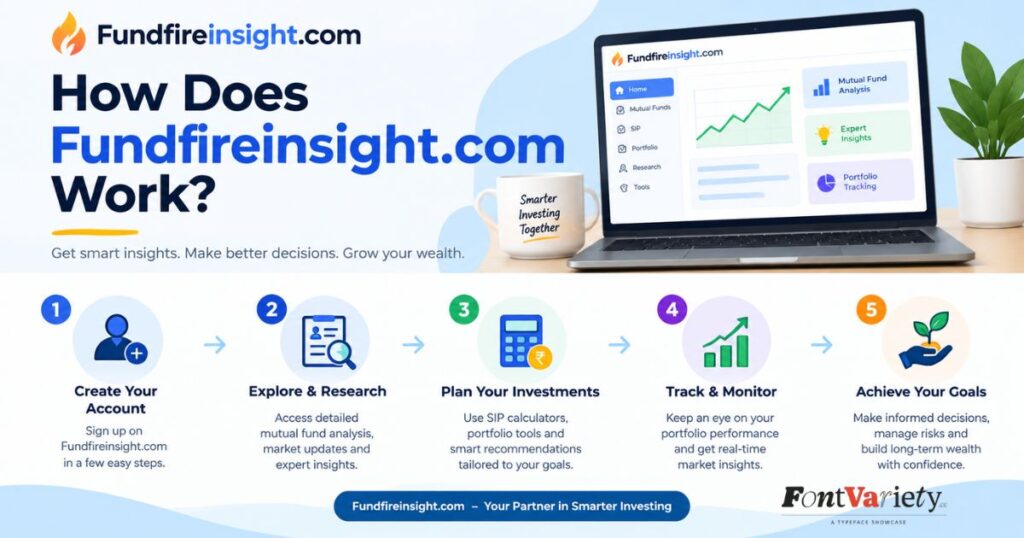
Mechanically, the site operates like any content-marketing blog: articles are published under category and tag taxonomies, promoted through internal links and presumably external SEO and guest-posting arrangements, and monetized through what appears to be a mix of contributed/paid content and possibly display advertising or affiliate links within articles.
Visitors arrive primarily through search engines, drawn either by specific finance queries (loan comparisons, tax topics) or by the aforementioned name confusion with the established FundFire brand. Once on the site, navigation is straightforward category links, a search bar, and “recent posts” and “archives” widgets in the sidebar guide further browsing.
There’s no user account, no personalized dashboard, and no back-end functionality beyond standard WordPress commenting infrastructure and comments appear to be effectively unused, based on the site’s own “no comments to show” note. In short, it works exactly like a low-overhead publishing blog, not a software platform.
User Experience and Interface Analysis
From a pure design standpoint, the site uses a fairly generic “Timely News” WordPress theme: a grid of thumbnail images, bold headline blocks, and a sidebar of recent posts and archives. It’s functional and loads like a typical news-style blog, without any unusual pop-ups or aggressive interstitials noted during review.
Where the experience falls short is coherence. Because the category structure doesn’t match the actual content mix a fishing article under “Finance,” an “Uncategorized” tag on several finance-relevant posts visitors browsing by category may find results that don’t match their expectations. That inconsistency undercuts the sense that the site is carefully curated.
There’s also no clear editorial hierarchy: posts aren’t dated with a consistent authorship pattern, and bylines rotate between a small number of generic usernames. For a site touching on money decisions, that thin editorial structure is a meaningful usability and trust gap, even before considering the accuracy of any individual article.
Benefits of Using the Platform
To be fair to the site, there are modest upsides for a casual reader. It’s free to browse, requires no sign-up, and covers a reasonably broad range of everyday financial topics credit cards, loans, insurance, tax planning in accessible, non-technical language that doesn’t assume prior financial expertise.
For someone doing very early-stage, general research (for example, understanding broadly what “profit on ad spend” means, or getting a plain-language overview of mileage-rate tax rules), the articles can serve as a readable starting point before consulting a licensed professional or primary source like the IRS or a regulator’s website.
The realistic limit on these benefits is that nothing here should be treated as personalized financial advice, and given the guest-post and paid-placement signals discussed earlier, specific product recommendations or “best” rankings should be independently cross-checked rather than acted on directly.
User Experience and Interface
Looking at the day-to-day experience of actually reading the site, load times were reasonable and the layout is mobile-responsive, which are baseline expectations for any modern WordPress install rather than distinguishing strengths. Text is legible, and images (served from a third-party CDN rather than the site’s own domain) load alongside most posts.
Search functionality exists but is basic a standard WordPress search box without filters by topic, date, or credibility markers. Pagination through older posts works but reveals a fairly modest total archive when compared to a genuinely established finance publication with years of dense daily output.
Overall, the interface won’t frustrate a casual visitor, but it also won’t reassure anyone looking for the polish, transparency, or depth associated with a serious financial media brand. It reads, functionally and visually, as a mid-tier content site rather than a flagship publication.
Specific Topics Covered
The site’s published archive spans Finance (tax planning, mileage rates, payday loan alternatives), Insurance (locum insurance for GP practices, travel-related money mistakes), Investments (option-writing strategies, ad-spend profitability for e-commerce), Banking, Credit Cards, Loans, and Stocks as named categories, alongside a genuinely unrelated post on fishing techniques.
Several posts are structured as detailed write-ups or “guides” to other named third-party websites and services rather than original financial analysis a format that is often, though not always, associated with sponsored or reciprocal promotional content in the SEO blog ecosystem.
This topic spread is broad rather than deep: no single subject area is covered with the depth, frequency, or specialist authorship you’d expect from a dedicated finance publication, which reinforces the earlier point that this functions as a general content site rather than a subject-matter authority.
Is fundfireinsight.com Safe to Browse?
From a pure technical-safety standpoint malware, phishing forms, or credential-harvesting behavior we found no direct evidence of active malicious behavior during this review; the site functions as a standard content blog. Readers should still confirm HTTPS is active in their own browser before entering any personal information, as noted earlier, since certificate status can change.
The more relevant safety question for a finance-adjacent site isn’t “will this infect my device” but “should I trust its financial claims.” Given the mixed topic categorization, generic authorship, and guest-post marketplace promotion, the honest answer is: treat it as general reading material, not a source for specific financial decisions, product comparisons, or numeric guidance.
If you’re evaluating whether to click through to third-party services promoted within its articles (loan providers, insurance products, or the various named websites it “reviews”), apply the same due diligence you would to any unfamiliar referral link verify the destination independently rather than relying on the endorsement itself.
Pros & Cons of fundfireinsight.com
Pros: Free and open access with no sign-up required; broad topical coverage across common personal-finance categories; plain-language writing accessible to non-experts; functional, mobile-friendly layout; no aggressive pop-ups or intrusive ad behavior observed during this review.
Cons: No verifiable ownership or editorial credentials; category structure doesn’t match actual content, undermining topical trust; signals of paid guest-post and third-party promotional content mixed with regular articles; name closely echoes an unrelated, established institutional finance publication, creating confusion risk; no proprietary tools, data, or features beyond standard blog functionality.
On balance, the cons outweigh the pros for anyone seeking authoritative financial guidance, though the pros are real enough for someone using the site purely as light, general-interest reading with no financial decisions riding on it.
Verified Alternatives for Institutional Finance & Authentic Advice
If your original goal was genuine institutional asset-management intelligence manager searches, mandate tracking, competitive data for the separately managed account industry that is a different product category entirely, typically sold as a paid subscription to institutional professionals rather than offered as free blog content.
For general personal-finance and small-business topics, prioritize sources with named, credentialed authors, transparent ownership, and clear editorial standards separating sponsored content from independent reporting, such as established financial media outlets, government agencies (IRS, SEC, CFPB), or licensed advisory firms.
The two subsections below list categories of alternatives worth checking depending on whether you need institutional-grade data or everyday personal finance and business guidance.
Accredited Institutional & Asset Management Portals
For actual institutional intelligence, the genuine FundFire service (operated by Money-Media, a Financial Times company) is the direct, verified alternative most likely confused with this domain it offers subscription-based competitive intelligence for the money-management industry, with named journalists and an established publishing history.
Beyond that, institutional researchers typically rely on regulator and industry-body resources such as the SEC’s EDGAR database for filings, and paid data platforms used by pension consultants and asset managers, which require verified institutional credentials rather than casual public sign-up.
Verified Personal Finance & Business Outlets
For everyday personal-finance reading credit cards, loans, insurance, taxes look to outlets with transparent staff listings and editorial policies, government sources like IRS.gov for tax-specific questions, and consumer-protection bodies like the CFPB for lending and credit issues, all of which publish under named authority rather than anonymous or generic bylines.
For small-business and investment topics specifically, cross-reference any blog-sourced claim against a primary source (a company’s own filings, a regulator’s guidance, or a licensed financial advisor) before acting, regardless of how polished or specific a third-party article’s numbers appear.
Frequently Asked Questions
Is fundfireinsight.com the same as FundFire.com?
No. FundFire.com is a separate, established institutional publication owned by Money-Media, a Financial Times company. Fundfireinsight.com is an unrelated WordPress blog, and we found no verified affiliation between the two.
Does fundfireinsight.com offer an institutional dashboard or mandate-tracking tool?
No. The site has no login, dashboard, or data product it’s a standard blog with categories, tags, and articles, not a software platform.
Is it safe to browse fundfireinsight.com?
We found no evidence of active malicious behavior, but always confirm HTTPS is active in your own browser before entering any personal information, since certificate status can change.
Who owns fundfireinsight.com?
We could not independently verify a named owner or business entity through public sources. The site discloses no company name, registration, or physical address, and its contact option is a generic email address.
Can I trust the financial advice on fundfireinsight.com?
Treat it as general, casual reading rather than financial advice. Signals like guest-post marketplace promotion and generic bylines suggest some content may be paid or contributed, so verify any specific numbers or recommendations against a primary or licensed source.
What should I use instead for institutional finance data?
The genuine FundFire service, SEC EDGAR filings, and licensed data platforms built for pension consultants and asset managers are the verified alternatives for institutional-grade intelligence.
Conclusion
Fundfireinsight.com is, in the end, a general-interest blog with finance-adjacent branding not the institutional asset-management tool its name might suggest. Its mismatched categories, generic authorship, and guest-post marketplace promotion point to a content operation built for search visibility rather than financial authority.
That doesn’t make it dangerous to browse, but it does mean readers should treat everything on it as a casual starting point rather than a trusted source for financial decisions. If your search actually led you here looking for the real FundFire, or for dependable personal-finance guidance, use the verified alternatives outlined above instead of relying on this domain directly.