


If you’ve searched “adstotally.com” and come away more confused than when you started, you’re not alone. The name suggests an advertising platform, but the site itself reads like a general-interest blog and that gap has fueled a wave of low-quality “explainer” articles that only add to the confusion rather than resolving it.
This review takes a straightforward, evidence-based approach: browse the actual site, check what third-party SEO and security tools report about it, and compare those findings against what a real ad network or a trustworthy content publisher would look like. The goal isn’t to render a verdict on whether AdsTotally is “good” or “bad” in the abstract, but to answer the specific questions people actually have is it an ad network, is it safe to visit, is it worth buying a guest post from, and why does a site with modest traffic show up in tens of thousands of monthly searches.
What follows is a full breakdown: what the site actually is, who appears to run it, how its traffic and search-visibility numbers hold up under scrutiny, a technical security audit, and a set of verified alternatives for anyone who landed here looking for genuine ad-tech infrastructure or a more transparent guest-posting destination.
Why adstotally.com Triggers Search Confusion
The name “AdsTotally” is the first thing that misleads people. It sounds like it belongs to an ad network, a monetization platform, or a campaign-management tool, and that expectation shapes every search a person runs before they ever land on the site. When the domain turns out to host a general-interest blog instead, the mismatch between the name and the actual content creates a wave of “is this legit” and “what is this site” queries.
This confusion is compounded by the sheer volume of branded searches the domain attracts relative to its visible content. A name that sounds like a product naturally gets typed into search bars by people expecting a login page, a pricing table, or a dashboard. When none of that appears, visitors are left trying to reconcile the branding with a stack of lifestyle, finance, and technology articles.
Search confusion like this is not unique to AdsTotally, but it is unusually persistent here because the naming convention so closely mirrors real ad-tech brands. This review exists to separate the assumptions baked into the name from what can actually be verified about the domain, its content, and its infrastructure.
Audit Methodology & Verification Tools
This breakdown relies on a mix of direct site browsing, historical content review, and third-party SEO and security tooling rather than assumptions drawn from the domain name alone. Traffic estimates, keyword volume, and domain-authority figures referenced throughout this piece come from publicly available SEO reporting tools, and are presented as estimates rather than verified server-side analytics, since no outside party can access a site’s actual traffic logs.
Technical checks referenced in the security section were run against publicly exposed signals: SSL certificate status, DNS and hosting provider identification, and public blocklists such as Google Safe Browsing. None of these methods can fully substitute for owning the site, but together they provide a reasonably complete external picture.
Where a claim cannot be independently confirmed such as who specifically writes or edits the content, or the exact economics behind the site’s guest-post offerings this review says so explicitly rather than presenting a guess as fact. That distinction matters for anyone using this piece to decide whether to pursue a backlink or guest-post deal with the domain.
In-Depth Analysis: Misconceptions vs. Reality
Most of the confusion around AdsTotally comes down to a handful of recurring assumptions that don’t hold up once the site is actually examined. The name suggests one business model, third-party content about the domain suggests another, and the visible site suggests a third. Untangling these threads is the core purpose of this section.
None of the three explanations are mutually exclusive, either. It’s entirely possible for a domain to have started as one type of project, been repurposed into a general content site, and simultaneously attracted low-effort explainer coverage that keeps the original branding confusion alive in search results.
The three subsections below walk through each misconception in turn: the ad-network myth, the effect of thin explainer articles written about the domain, and what can actually be established about how the site makes money today.
1. The “Ad Network & Monetization” Myth
Nothing on the current version of adstotally.com resembles an ad-serving platform, a campaign dashboard, or a publisher-monetization product. There’s no sign-up flow for advertisers, no documented ad-inventory marketplace, and no case studies of campaigns run through the domain, which are the baseline features any real ad network would showcase prominently.
The myth persists mainly because the domain name itself does the marketing work that the content doesn’t. A visitor arriving from a search for “ad network” or “monetization platform” is primed to interpret anything on the page as advertising-related, even when the actual content is an article about travel tips or personal finance.
2. The Role of Low-Quality Third-Party “Explainer” Sites
A cluster of thin, AI-assisted articles exists across the web that describe AdsTotally as a full-featured advertising platform with dashboards, analytics, and campaign tools. These pieces read like generic marketing copy rather than firsthand reviews, and several appear to have been generated without anyone actually visiting the current site.
These explainer articles matter because they actively feed the myth this review is trying to correct. Search engines index them alongside the real site, so anyone researching AdsTotally is likely to encounter confident-sounding claims about ad-management features that simply are not present anywhere on the domain today.
3. Monetization Model of adstotally.com
Based on what’s visible on the site, the most plausible monetization path is standard content-site revenue: display advertising served through a third party, plus paid guest-post or link placements sold to outside marketers and SEO agencies. Neither of these requires the site to be an “ad network” in the platform sense.
Selling guest posts and backlinks is a common business model for aging content domains, especially ones with some residual search visibility. It doesn’t make the site fraudulent by itself, but it does mean the domain’s value proposition is about distribution and link equity rather than any advertising technology of its own.
What Is Adstotally.com Really?
Stripped of the branding assumptions, adstotally.com functions as a general-interest online publication. It carries articles across broad categories business, finance, technology, health, lifestyle, and similar topics the same kind of catch-all structure common to sites built primarily to accumulate search traffic and sell placements within that content.
There is nothing in the visible structure of the site no advertiser portal, no publisher sign-up, no documented API that supports the idea of it being a functioning ad-tech product. What exists instead is a content library that reads like it was assembled to rank for a wide spread of keywords rather than to serve any single, focused readership.
Understanding the site this way reframes most of the questions that follow. Instead of asking whether it’s a trustworthy ad network, the more useful question is whether it’s a trustworthy content publisher and a reasonable place to buy or place a guest post a distinct set of criteria this review addresses in the sections ahead.
Is Adstotally.com an Ad Network?
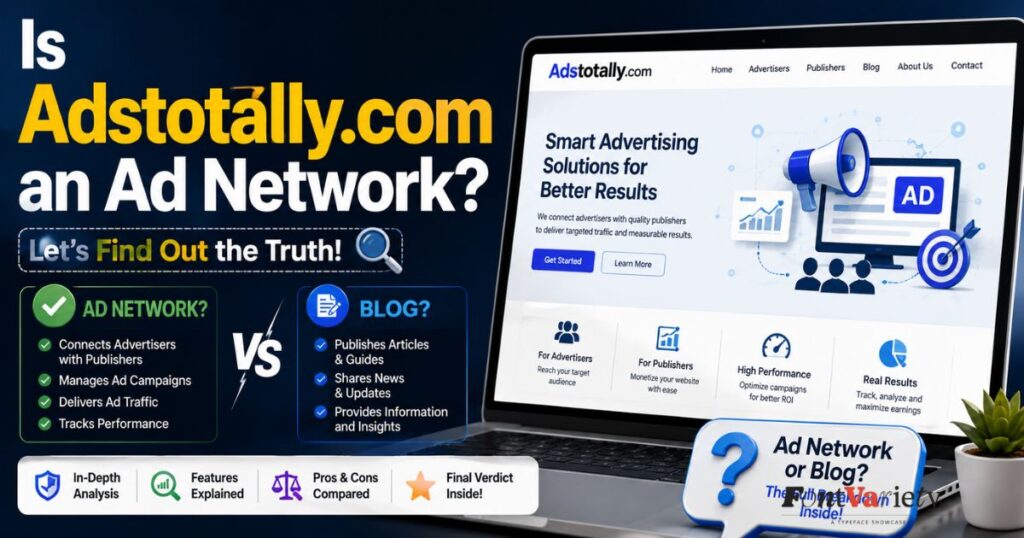
Based on everything observable on the current site, the answer is no. An ad network requires infrastructure the domain doesn’t display: advertiser accounts, campaign creation tools, inventory for publishers to plug into, and typically some public documentation of pricing or reach. None of that is present.
What likely happened is simpler than a pivot away from ad tech: the domain name was chosen for its brandable, advertising-adjacent sound, which is common practice among content-site operators looking for a name that will perform well in keyword-driven searches, regardless of what the site actually publishes.
For anyone who arrived here specifically looking for an ad platform to run campaigns through, the honest answer is that this isn’t the site for that purpose. The rest of this review treats adstotally.com strictly as a content and guest-posting destination, since that’s the category it actually belongs to.
My First Impressions Browsing the Site
On a first pass, the site presents as a fairly generic multi-topic blog: a homepage feed of recent posts, category navigation across the usual lifestyle and business verticals, and articles that read as competently written but rarely distinctive. Nothing about the layout signals a specialized publication with a defined editorial voice.
The design itself is functional rather than polished closer to a templated CMS build than a custom-designed media property. That’s not automatically a red flag, since plenty of legitimate smaller publishers run on similar templates, but it does suggest a lean operation rather than a well-resourced editorial team.
What stood out most was the disconnect between the site’s apparent scale hundreds of published articles across many categories and the relatively thin signs of an active, engaged readership, such as comments, social sharing, or author engagement. That gap is worth keeping in mind heading into the traffic analysis later in this review.
The Old Content Tells a Different Story
Digging into older, archived versions of the site reveals a different emphasis than what’s visible today. Earlier iterations leaned more heavily into technology and marketing topics, with a tone and structure that felt closer to a niche trade blog than the broader lifestyle mix seen now.
This kind of drift is common for domains that get repurposed or sold over time. A site built originally around one niche often gets expanded into a wider content mill once new operators take over, because broader topic coverage tends to capture more long-tail search traffic than a narrow focus does.
The practical takeaway is that the current version of adstotally.com may not reflect a single continuous editorial vision. Anyone evaluating it for a guest post or backlink should judge the site by what it is today, not by whatever niche authority its older content might once have suggested.
Who Actually Runs Adstotally.com?
Public information about the people or company behind the domain is limited. There’s no prominently displayed “About Us” page with named editors or a corporate entity, and author bylines, where present, don’t provide enough detail to independently verify anyone’s identity or credentials.
This kind of opacity isn’t unusual for smaller content sites, especially ones that lean on guest contributions and paid placements rather than a fixed editorial staff. It does mean that claims about the site’s authority or expertise are harder to substantiate than they would be for a publication with transparent ownership.
Anyone relying on this domain for a business relationship buying a link, submitting a guest post, or citing it as a source should factor in this lack of transparency. It’s a reasonable point of caution rather than proof of anything malicious, but it does limit how much accountability exists if a transaction goes wrong.
Guest Posts and Backlinks on Adstotally.com
The site appears to actively sell guest-post placements, a practice visible both in outreach templates circulating among SEO communities and in listings on some link-marketplace platforms. Pricing and claimed traffic figures for these placements vary noticeably depending on which marketplace or reseller is quoting them.
That inconsistency is itself a signal worth taking seriously. When the same domain is marketed at different price points with different traffic claims across different sellers, it usually means the listings are being resold through multiple middlemen rather than sold directly and transparently by the site’s actual operator.
Buyers considering a guest post here should verify current traffic and authority metrics independently rather than trusting whatever number appears in a marketplace listing, and should treat any dofollow link purchase as carrying the same general risks that apply to buying links from any content-mill-style domain.
What Does AdsTotally Publish?
The published content spans a wide net of categories: business and finance explainers, general technology pieces, health and lifestyle roundups, travel guides, and similar broad-appeal topics. Individual articles tend to be structured around common search queries rather than original reporting or a distinctive point of view.
Much of the writing reads as competent but generic the kind of content that’s optimized to answer a search query adequately rather than to build a loyal readership around a specific voice or expertise. That’s consistent with a site whose primary business is search visibility and link sales rather than audience building.
There’s no indication of investigative work, original data, or exclusive interviews anywhere in the catalog. For readers looking for authoritative, deeply researched material in any of these verticals, this site is unlikely to be a primary destination; it functions more as supporting content than a flagship publication.
Who Writes the Articles?
Bylines on the site are inconsistent, with many articles attributed to a generic site handle rather than named individual writers. Where individual names do appear, there’s typically no linked author bio, social profile, or portfolio that would let a reader verify the person’s background or expertise.
This pattern is common on content sites that rely heavily on freelance or outsourced writing at scale, where consistency of voice and verifiable authorship take a back seat to publishing volume. It doesn’t necessarily mean the content is inaccurate, but it does mean claims of subject-matter expertise are difficult to check.
For topics like finance or health, where author expertise genuinely matters to the reliability of the advice given, this lack of attribution is a meaningful limitation. Readers should treat articles in those categories with the same caution they’d apply to any unattributed advice found online.
Is AdsTotally Actively Maintained?
Publishing activity on the site appears inconsistent rather than following a steady editorial calendar. Some sections show recent timestamps, while others contain content that looks untouched for extended periods, suggesting maintenance happens in bursts rather than continuously.
This pattern is typical of sites maintained primarily to preserve existing search rankings and guest-post inventory rather than to grow an active audience. Occasional updates keep the domain from going fully stale in search engines’ eyes, without requiring the ongoing investment a genuinely active newsroom would need.
For anyone evaluating whether a new guest post or backlink placed here is likely to get sustained visibility, the irregular update pattern is a relevant consideration a site that publishes in bursts is less likely to actively promote or maintain new content long-term compared to one with a consistent editorial rhythm.
AdsTotally Organic Traffic Analysis
Third-party SEO tools estimate the site’s organic traffic in the low thousands of monthly visits, a modest figure for a domain with hundreds of published articles across many categories. That gap between content volume and traffic suggests most of the catalog isn’t ranking competitively for its target keywords.
Estimated traffic value a metric SEO tools use to approximate what that traffic would cost to buy via paid search is reported at essentially zero, reinforcing the idea that whatever visits the site receives aren’t concentrated on commercially valuable search terms. This matters directly for anyone evaluating the site as a link or guest-post destination.
It’s worth repeating that these figures are third-party estimates, not confirmed analytics from the site owner, and different tools can produce meaningfully different numbers for the same domain. Still, multiple independent estimates pointing in the same low-traffic direction is a reasonably consistent signal.
Does the 3.9K Traffic Really Belong to AdsTotally?
Reported organic traffic in the range of roughly 3,900 monthly visits is attributed overwhelmingly to the homepage rather than distributed across the site’s individual articles. That concentration pattern is unusual for a content site with a large published catalog, where traffic would normally be spread across many ranking pages.
A traffic profile skewed almost entirely toward the homepage is more consistent with branded or navigational search people typing the domain name directly because they’ve heard of it or seen it referenced elsewhere than with organic discovery of individual articles through informational search queries.
That distinction matters for anyone weighing a guest-post purchase on the assumption that their article will pick up meaningful organic traffic. If the bulk of visits are homepage-bound branded searches rather than content-driven, a new article buried in the site’s archive is unlikely to inherit much of that traffic.
Also Like To Read This: When Hondingo88 Patches PC: A Complete Guide to What It Means
Why Does “Adstotally.com” Have 74K Searches?
Search-volume tools report roughly 74,000 monthly U.S. searches for the exact phrase “adstotally.com” a striking figure for a domain with modest actual site traffic and limited public brand presence. That disconnect is the central mystery this review set out to investigate.
Several explanations are plausible: the volume could reflect people who’ve encountered the domain in outreach emails, guest-post marketplaces, or spam-adjacent contexts and are searching to check its legitimacy before engaging with it; it could also be inflated or misattributed by the reporting tool itself, since keyword-volume estimates for exact-domain queries can be noisy.
Whatever the underlying cause, this volume of searches for a domain-plus-extension phrase is not typical of organic brand recognition. It reads much more like the pattern seen around sites that show up frequently in cold outreach or marketplace listings, where recipients search the name specifically to check whether it’s trustworthy which is, in effect, exactly what this article is doing.
Technical Infrastructure, Security & Privacy Audit
Beyond the content and traffic questions, a basic technical audit helps establish whether the domain poses any direct safety risk to visitors. This section covers registration transparency, transport security, public malware and blocklist status, and the risk profile of any ad-related scripts running on the page.
None of these checks are exhaustive, since a full security assessment would require access the public doesn’t have. But they’re enough to flag any obvious red flags an expired certificate, a domain on a public blocklist, or scripts pulling from known-bad ad networks which is the level of scrutiny most readers actually need.
The subsections below break each of these checks down individually, since they measure different things and a site can pass one while failing another.
WHOIS & Registrant Transparency
Public WHOIS records for the domain show registration dating back several years, with privacy-protection services masking the individual or organization behind the registration a standard and widely used practice that, by itself, isn’t a red flag but does limit transparency.
Combined with the lack of a detailed “About” page on the site itself, this means there’s no easy way to independently verify who legally owns or operates adstotally.com. That’s worth factoring into any decision to enter a paid arrangement with the site, since recourse in a dispute would be harder to pursue against an anonymous operator.
Transport Layer Security (SSL/HTTPS)
The site serves content over HTTPS with a valid SSL certificate, typical of sites running behind a CDN and reverse-proxy service. This is a basic but important baseline: it means data in transit between a visitor’s browser and the site is encrypted, and browsers won’t flag the connection as insecure.
Valid HTTPS is table stakes at this point rather than a strong positive signal virtually every legitimate site and plenty of low-quality ones use it, since certificates are free and easy to obtain. It rules out one category of concern without saying much else about the site’s overall trustworthiness.
Malware & Safe Browsing Status
Checks against public blocklisting services did not turn up any active flags for the domain at the time of this review. That’s a reasonable, if limited, positive signal it means the site hasn’t been reported for distributing malware or hosting phishing content through the databases these services track.
It’s important to be clear about the limits of this check: blocklist status can change, these databases don’t catch everything, and a clean result today doesn’t guarantee the site will remain that way. Readers should still exercise normal caution around any third-party ad scripts or download links they encounter on the page.
Ad Network Script & Redirect Risks
Given the site’s advertising-adjacent name, it’s reasonable to specifically check what ad-serving or redirect scripts actually load on the page. Standard display-ad and analytics scripts were the primary third-party code observed, without evidence of aggressive pop-under ads or forced redirect chains during normal browsing.
That said, ad-serving arrangements on smaller content sites can rotate between different networks over time, sometimes including lower-quality ad exchanges that occasionally serve deceptive or redirect-heavy ads. A clean snapshot today doesn’t guarantee the same experience on every future visit, so general ad-blocker use remains a reasonable precaution here as on most content sites.
Comparative Matrix: adstotally.com vs. Legitimate Ad Tech Networks
| Criteria | adstotally.com | Legitimate Ad Tech Networks |
| Advertiser sign-up / campaign dashboard | Not present | Core product feature |
| Publisher monetization tools | Not present | Core product feature |
| Public pricing or reach documentation | Not present | Typically published or available on request |
| Primary content | General-interest articles | Product documentation, case studies |
| Revenue model (as observed) | Display ads + paid guest posts/links | Ad serving, revenue share, platform fees |
| Ownership transparency | Limited (WHOIS privacy, no detailed About page) | Usually a registered company with public contact info |
| Traffic concentration | Mostly homepage/branded | Spread across product and marketing pages |
This side-by-side comparison makes the core finding of this review concrete: adstotally.com simply doesn’t share the structural features that define an ad-tech company, regardless of what its name implies. The gap isn’t subtle it’s the difference between a product business and a content business.
Anyone using this matrix to make a decision should weigh it against their actual goal. Someone looking for an ad network to run campaigns through should look elsewhere entirely; someone evaluating a guest-post opportunity should read the matrix as confirmation that they’re dealing with a content site, not a tech platform, and price their expectations accordingly.
User Safety Guidelines & Recommendations
For casual visitors, there’s no strong evidence that browsing adstotally.com poses an unusual security risk HTTPS is properly configured, and the site isn’t flagged on major blocklists as of this review. Standard browsing hygiene, such as running an ad blocker and avoiding unfamiliar download prompts, is sufficient here as it is on most general content sites.
For anyone considering a commercial relationship with the site buying a guest post, purchasing a backlink, or paying for placement more caution is warranted. Independently verify current traffic figures rather than trusting marketplace listings, request direct communication with whoever controls the site, and treat vague or inconsistent pricing across resellers as a reason to negotiate carefully or walk away.
It’s also worth remembering that a link or guest post’s SEO value depends heavily on the site’s actual authority and relevance, not its name. Given the traffic and transparency findings in this review, buyers should set modest expectations for what a placement here is likely to deliver.
Verified Alternatives for Digital Marketers & Publishers
For marketers who arrived at adstotally.com genuinely looking for ad-serving or monetization infrastructure, there are established platforms built specifically for that purpose, with transparent documentation, public pricing tiers, and verifiable company backing. The same applies to publishers seeking reliable places to place guest content or build backlinks with clearer traffic and authority data.
The two subsections below split these alternatives into ad networks proper and content/SEO publications, since those serve different needs and shouldn’t be conflated the way adstotally.com’s name conflates them.
Recognized Ad Networks & Monetization Platforms
Established options in this space include Google AdSense and Google Ad Manager for publisher monetization, Media.net as a contextual-ad alternative, and programmatic platforms like AdRoll or Taboola/Outbrain for native and retargeting campaigns. Each of these publishes clear eligibility requirements, pricing structures, and documented case studies.
These platforms differ meaningfully in minimum traffic requirements, payout models, and content restrictions, so the right choice depends on a publisher’s specific traffic profile and niche. What they share is verifiable corporate ownership and public accountability the exact qualities found lacking in the adstotally.com audit above.
Trusted Marketing & SEO Publications
For guest posting and thought-leadership placements, established marketing and SEO publications outlets like Search Engine Journal, Search Engine Land, and Moz’s blog offer transparent editorial guidelines, named editorial staff, and traffic figures that are far easier to independently verify than marketplace-quoted numbers for a domain like AdsTotally.
Placements on recognized publications typically cost more and involve stricter editorial review, but that friction reflects genuine audience value and accountability. For marketers weighing a cheap, opaque guest post against a pricier, verifiable one, the long-term SEO and reputational value usually favors the latter.
Frequently Asked Questions
Is adstotally.com an ad network?
No. There’s no advertiser sign-up, campaign dashboard, or publisher-monetization tool anywhere on the site. It functions as a general-interest content blog, not an advertising platform, despite the name.
Is adstotally.com safe to visit?
Based on standard public checks, the site uses valid HTTPS and wasn’t flagged on major safe-browsing blocklists at the time of this review. Normal browsing precautions, like using an ad blocker, are reasonable here as they are on most content sites.
Who owns or runs AdsTotally?
This isn’t clearly disclosed. WHOIS records are privacy-protected, and the site doesn’t have a detailed “About Us” page identifying a company or individual, which limits transparency and accountability.
Why does “adstotally.com” get around 74,000 monthly searches if the site’s traffic is so low?
That gap likely reflects people encountering the domain through guest-post outreach or link-marketplace listings and searching to check its legitimacy, rather than genuine organic brand recognition. Keyword-volume tools can also be noisy for exact-domain phrases.
Is it worth buying a guest post or backlink from AdsTotally?
Proceed cautiously. Traffic and pricing claims vary significantly across different marketplace listings, and most of the site’s reported traffic appears concentrated on the homepage rather than spread across individual articles, meaning a new post may not inherit much visibility.
What should I use instead if I actually need an ad network?
Established platforms like Google AdSense, Google Ad Manager, Media.net, or programmatic networks such as Taboola and Outbrain offer transparent pricing, documentation, and verifiable company ownership features this domain doesn’t provide.
Conclusion
AdsTotally.com is not an ad network, a campaign-management platform, or a publisher-monetization service, regardless of what its name implies. It’s a general-interest content site that most plausibly earns revenue through display advertising and paid guest-post or backlink placements a legitimate enough business model, but a fundamentally different one than the name suggests.
The technical audit didn’t surface any active safety red flags, but it did surface a pattern of limited transparency: an anonymous registrant, inconsistent authorship, irregular publishing activity, and traffic figures that skew heavily toward the homepage rather than the article catalog. None of that makes the site dangerous, but it does mean claims made about it whether by marketplace resellers or thin explainer articles elsewhere online deserve independent verification before any money changes hands.
If you came here looking for advertising infrastructure, look toward established, transparent platforms instead. If you came here evaluating a guest-post or backlink opportunity, treat this review as a starting point for due diligence, not a final answer verify current traffic and ownership details directly before committing to anything.